Skip to content


Find out when cracked tyres become dangerous, what causes sidewall cracks, and exactly when to replace them, practical advice for UK drivers.
You spot it during a quick walk around the car. A thin line running along the sidewall of your tyre. It might look minor, almost cosmetic. But that small crack could be telling you something important about the structural health of your tyre, and ignoring it is a risk not worth taking.
Tyre cracking is one of the most common issues reported by drivers across the UK, yet it remains one of the most misunderstood. Some cracks are superficial and manageable. Others are a serious safety hazard hiding in plain sight. Knowing the difference could protect your vehicle, your wallet, and most importantly, your safety on the road.
This guide breaks it all down. What causes tyre cracks, how to assess their severity, when replacement becomes urgent, and what UK drivers specifically need to know.
Are Cracked Tyres Dangerous?
Sometimes.
Fine surface cracks caused by age or weathering may only require monitoring. However, cracks in the sidewall, bead area, or any crack deep enough to expose the tyre’s internal structure should be treated as a serious safety concern and usually require immediate replacement.
| Crack Type | Risk Level |
|---|---|
| Fine surface cracking | Low |
| Sidewall cracking | High |
| Bead area cracking | High |
| Cracks exposing cords | Severe |
| Cracks with bulges | Severe |
What Causes Tyres to Crack?
Tyre cracking, sometimes called sidewall cracking or dry rot, happens when the rubber compounds in a tyre begin to break down. It is not always a sign of poor quality tyres. Even premium brands crack under the right conditions.
The Main Culprits Behind Tyre Cracking
- UV Exposure and Ozone Degradation
Sunlight and atmospheric ozone are the leading causes of tyre cracking in the UK. The UV rays and ozone in the air attack the rubber polymers over time, stripping out the protective oils that keep rubber supple. Drivers in open car parks or those who leave their vehicles stationary for extended periods are especially vulnerable. In areas like Guildford, where cars often sit parked for long stretches during working hours, this type of degradation is particularly common.
- Age of the Tyre
Rubber has a lifespan regardless of how many miles it has covered. A tyre that is six or more years old begins to degrade naturally, even if it looks fine on the tread. The GOV.UK guidance on tyre safety recommends that tyres over ten years old should be replaced as a rule, but many tyre specialists advise inspecting from year five onwards.
- Infrequent Use
This one surprises many drivers. Cars that sit unused for weeks or months, a second vehicle, a classic car, or a lockdown era holdover, are more prone to cracking than cars driven regularly. Regular driving flexes the tyre, distributing the natural oils within the rubber and keeping it healthy. A stationary tyre loses that benefit entirely.
- Improper Inflation
Underinflated tyres flex excessively under load, creating micro stress across the sidewall with every rotation. Over time, this repeated stress opens up surface cracks. Overinflation causes a different problem, it stretches the rubber beyond its natural range. Both extremes accelerate cracking, and both are easy to avoid with a simple monthly pressure check.
- Harsh Cleaning Products
Using petroleum based tyre dressings or aggressive cleaning sprays strips the rubber of its natural protective compounds. This is a surprisingly common cause of premature cracking, particularly when drivers apply shine products regularly to keep their tyres looking fresh.
| Cause | Risk Level | Preventable? |
| UV and ozone exposure | High | Partially |
| Tyre age 6 or more years | High | No, replace proactively |
| Infrequent use | Medium | Yes, drive regularly |
| Incorrect tyre pressure | High | Yes, monthly checks |
| Harsh tyre cleaners | Medium | Yes, use rubber safe products |
How to Spot Cracked Tyres: What to Look For
Not all cracks are created equal. A professional tyre inspection is always the most reliable option, but knowing what to look for during your own checks puts you in a much stronger position.
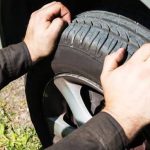
Walk around your vehicle and crouch down at each corner. Look at both the sidewall and the tread surface. Rotate the tyre slowly if possible to inspect the full circumference.
Signs that warrant immediate professional attention:
- Cracks that are deep enough to see the underlying cords or fabric inside the tyre
- Cracking that runs continuously around a significant portion of the sidewall
- Any cracking near the bead, the inner edge where the tyre meets the wheel rim
- Bulging or deformation alongside the cracks
- Cracks that are wider than a surface hairline, anything you can see into rather than just across
Signs that may still be manageable but need monitoring:
- Fine surface lines distributed across the sidewall without depth
- Light crazing in the tread grooves only, with no sidewall involvement
- Very early stage surface weathering with no structural depth
“I thought the cracks on my tyres were just cosmetic. A tyre specialist told me one of them was less than a millimetre from the steel belt. It would have been a blowout at speed.”, UK Motoring Forum
Drivers often cover a mix of dual carriageway and town roads, meaning a compromised tyre could fail at varying speeds. Regular visual checks take less than five minutes and could genuinely save lives.
When Are Cracked Tyres Actually Dangerous?
This is the question that matters most. The honest answer is that severity is everything, and there is no single crack that is automatically fine or automatically catastrophic. You are assessing a combination of factors.
The Three Danger Zones
Sidewall Cracks
The sidewall carries the load of the vehicle and flexes with every rotation. Cracks here are structurally significant because they weaken the tyre’s ability to hold its shape under pressure. A cracked sidewall can lead to sudden deflation or a blowout, particularly at motorway speeds. If you see any cracking on the sidewall that has visible depth, the tyre needs replacing.
Bead Area Cracks
The bead is the point where your tyre locks onto the rim. Cracking here can compromise the airtight seal, leading to slow leaks or sudden pressure loss. This is one of the most dangerous forms of tyre cracking and is often invisible until a trained eye inspects the tyre properly.
Tread Cracking
Cracks between the tread blocks are generally less dangerous than sidewall cracks but still indicate rubber deterioration. In wet conditions, deteriorated tread rubber reduces grip and increases stopping distances.
A tyre with any combination of these crack types, particularly one that is also approaching or past six years of age, should be assessed without delay.
The Age Factor: Why Tyre Date Matters More Than You Think
Many drivers replace tyres based on tread depth alone. Tread depth is important, but it tells only part of the story. A tyre can have 4mm of tread remaining and still be structurally compromised due to age related rubber degradation.
Every tyre manufactured carries a four digit DOT code on its sidewall. The first two digits represent the week of manufacture, and the last two represent the year. A tyre marked 2319 was made in the 23rd week of 2019.
| Tyre Age | Condition Guidance |
| Under 5 years | Monitor normally, inspect annually |
| 5 to 6 years | Increase inspection frequency, watch for cracking |
| 6 to 10 years | Professional inspection strongly advised, replace if any cracking found |
| Over 10 years | Replace regardless of appearance or tread depth |
Drivers upgrading vehicles or buying used cars should always check the tyre date codes before assuming the rubber is roadworthy. Tyres can sit in a warehouse or on a forecourt for months before being fitted, and that time counts.
Cracked Tyres and UK Law: What You Need to Know
Driving on illegal tyres in the UK is not a minor oversight. The penalties are significant, and the liability in an accident involving defective tyres falls squarely on the driver.
Under UK law, a tyre with a cut or tear that is long enough or deep enough to expose the ply or cord structure is classified as defective and illegal for road use. Cracking that reaches this level puts the vehicle outside legal limits immediately.
The GOV.UK guidance on tyre condition and safety outlines the legal standards clearly. A defective tyre carries a fine of up to £2,500 and three penalty points per tyre. With four cracked tyres, a driver could face licence revocation and a fine exceeding £10,000.
Beyond the legal side, insurance policies may be invalidated following an accident if the vehicle is found to have illegal tyres. That risk alone should prompt immediate action when cracking is identified.
Can You Repair a Cracked Tyre?
The straightforward answer is no. Cracking cannot be repaired in the same way a puncture can be patched. A puncture is localised, mechanical damage to an otherwise intact tyre. Cracking is chemical degradation of the rubber itself. You cannot reverse that process.
Some products marketed as tyre conditioners or crack fillers do exist, but these offer cosmetic improvement at best. They do not restore the structural integrity of the rubber or stop the underlying deterioration from progressing. A cracked tyre is a tyre on borrowed time.
The only safe response to significant cracking is replacement. If alignment is also a concern after fitting new tyres, which it often is, particularly after an extended period on deteriorated rubber, a wheel alignment check will ensure your new tyres wear evenly from day one and perform as they should.
How Tyre Cracking Affects Braking and Handling
A healthy tyre is not just about the rubber surface you can see. It is a complex, layered structure with steel belts, fabric plies, and specially formulated rubber compounds working together. When cracking sets in, the cohesion of those layers begins to break down.
The practical effects on driving are real and measurable.
Reduced wet grip
Degraded rubber loses its ability to channel water effectively, increasing the risk of aquaplaning. For drivers on the A31 through Farnham or the A325 around North Camp, wet grip is not an abstract concept. It is critical.
Longer stopping distances
A tyre with deteriorated rubber compounds cannot absorb energy and grip the road surface with the same efficiency as a healthy tyre. Braking performance suffers, and in emergency situations, those extra metres matter enormously.
Uneven tyre wear
Cracking often develops unevenly, and a structurally compromised tyre wears at a different rate to a healthy one. This creates imbalance across the axle, affecting steering precision and stability.
Risk of sudden failure
A cracked sidewall can give way without warning under load, particularly when cornering at speed or carrying a full passenger load. A sudden blowout at 60mph is a very different situation to a flat tyre on a residential street.
If your vehicle has been pulling to one side or the braking feels inconsistent, cracked tyres may not be the only factor. A brake inspection alongside a tyre assessment gives you a complete picture of your vehicle’s safety.
Run-Flat Tyres and Cracking: A Special Consideration
Run-flat tyres are increasingly common on newer vehicles, particularly those without a spare wheel. They are designed to continue operating safely after a puncture, supporting the vehicle’s weight on reinforced sidewalls. This makes cracking in run-flat sidewalls an even more serious concern.
The reinforced sidewall of a run-flat tyre is its defining feature and its primary structural element. Cracking in that zone compromises the very mechanism that makes a run-flat tyre functional under emergency conditions. A cracked run-flat tyre that suffers a puncture cannot perform as designed. The driver may have no warning before complete structural failure.
If you drive a vehicle fitted with run-flat tyres, understanding how run-flat tyres work and knowing the specific inspection requirements for them is particularly important. Do not assume that because a run-flat looks intact, it is safe to continue using if cracking is present.
How to Prevent Tyre Cracking
Prevention is always preferable to replacement, and several straightforward habits significantly reduce the risk of premature cracking.
- Check tyre pressure monthly
Correct inflation prevents the excessive flexing that accelerates sidewall cracking. Check pressures when the tyres are cold, using the manufacturer’s recommended figures found in the vehicle handbook or door sill sticker.
- Store vehicles correctly during long periods of inactivity
If a vehicle is being stored for several weeks or longer, park it in a shaded, covered environment where possible. UV exposure is the single biggest external driver of rubber degradation.
- Use rubber safe tyre care products
Avoid petroleum based tyre shines. Choose water based protectants that condition the rubber without stripping its natural oils. Look for products labelled as UV protective.
- Drive the vehicle regularly
Even a short drive every week or two keeps the rubber compounds distributed and working. A stationary tyre deteriorates faster than one in regular use. Drivers who keep a second vehicle should bear this in mind during longer gaps between use.
- Inspect tyres visually every month
A quick walk around takes five minutes and catches early stage cracking before it becomes a safety issue. The earlier cracking is identified, the more options you have.
- Replace tyres proactively at six years
Do not wait for visible failure or tread wear limit. If a tyre is six years or older and showing any cracking, treat replacement as a priority rather than a consideration.
| Prevention Habit | How Often | Impact on Cracking Risk |
| Tyre pressure check | Monthly | High reduction |
| Visual tyre inspection | Monthly | High reduction |
| Vehicle driven regularly | Weekly minimum | Medium reduction |
| UV protective tyre product applied | Every 3 months | Medium reduction |
| Tyre age checked and recorded | At purchase and annually | High reduction |
When to Replace Cracked Tyres: A Clear Decision Guide
The decision to replace a cracked tyre does not need to be complicated. Use this framework to assess where you stand.
Replace immediately if:
- Any crack reveals the internal cords or fabric structure of the tyre
- Cracking is present at or near the bead
- A bulge or deformation accompanies the cracking
- The tyre is over ten years old regardless of crack severity
- Multiple cracks combine to cover a significant portion of the sidewall
Have a professional assess urgently if:
- Cracks have depth beyond a surface hairline
- The tyre is between six and ten years old and showing any cracking
- You have noticed a change in handling, braking, or ride quality alongside visible cracking
- The vehicle has been unused for more than three months and cracking has appeared
Monitor and inspect monthly if:
- Only very fine surface crazing is present in the tread grooves
- The tyre is under five years old with no sidewall involvement
- No handling or performance changes have been noticed
When in doubt, a professional inspection costs nothing compared to the risks of a tyre failure on the road. A qualified tyre specialist can assess crack depth and structural integrity in minutes, giving you a clear and confident answer.
Conclusion
Cracked tyres exist on a spectrum from minor surface weathering through to serious structural failure waiting to happen. The location of the crack, its depth, the age of the tyre, and the overall condition of the rubber together determine whether you are looking at something to monitor or something to replace today.
What is clear is that cracking is never something to dismiss without proper assessment. The risk of a tyre failure at speed, particularly on a busy road, is not worth carrying when the solution is straightforward. Check your tyres regularly, know your tyre’s age, and replace cracked rubber before it becomes a roadside emergency.
Frequently Asked Questions
Is it safe to drive on tyres with small cracks?
Small surface cracks in the tread area that have no depth may not be immediately dangerous, but they are a sign of rubber deterioration that warrants monitoring. Sidewall cracks, even small ones, should always be assessed by a professional, as they affect structural integrity.
How do I know if my tyre cracks are too deep?
If you can see into the crack, if there is visible depth rather than just a surface line, it is too deep to be safe. Any crack that reveals the interior fabric or cord structure of the tyre makes it illegal and unsafe for road use.
Can cracked tyres cause a blowout?
Yes. Cracked sidewalls are a known cause of sudden tyre failure. The cracking weakens the structural wall of the tyre, which can give way under load, particularly at higher speeds or when cornering.
How often should I check my tyres for cracks?
A visual inspection once a month is a reasonable minimum. If your vehicle sits unused for extended periods, check the tyres before returning it to regular use. Always inspect after any extended period of hot weather, which accelerates rubber degradation.
At what age should tyres be automatically replaced?
Most tyre manufacturers and safety bodies recommend replacing tyres at ten years from the date of manufacture, and having them professionally inspected from year five. If cracking is visible before that point, replacement should not wait for the age threshold.
Do tyre cracks appear more in certain weather conditions?
Yes. Hot, dry summers accelerate UV and ozone degradation, making cracking more likely. Cold winters make rubber brittle, which can worsen existing cracks. The transition between seasons is a particularly good time for a thorough tyre inspection.